Getting Around Tirana
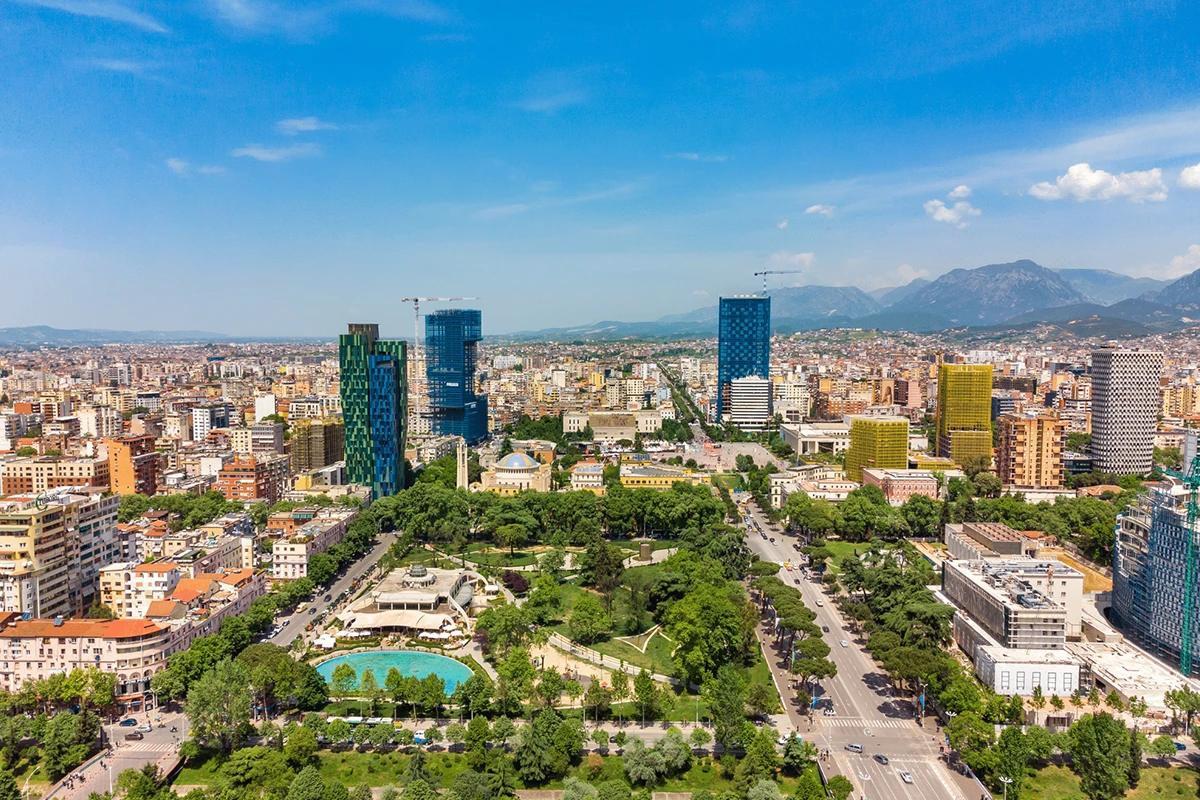
Tirana is a compact city, and most visitors get around easily without ever using public transport. Still, it helps to know all the options. This guide goes through them, with what to expect and a rough idea of cost, so you can choose what suits each trip.
Walking — your main option
The city centre is flat and small. From Skanderbeg Square you can reach the Pyramid, the New Bazaar, Blloku and the main museums in 5 to 15 minutes on foot. Walking is free, often the fastest choice in the centre, and the best way to see the city, since much of the pleasure of Tirana is in its streets, cafés and squares.
Two cautions. Pavements can be uneven, so watch your step, and traffic does not always stop for pedestrians. Use marked crossings, make eye contact with drivers, and do not assume a green light means cars will wait.
From the apartment to the centre
Most sights are within a comfortable walk or a short, cheap taxi ride of CITY LINE APARTMENTS. For the exact walking times to restaurants, cafés, shops and attractions, the listing pages on this site show the distance from the apartment, so you can judge whether to walk or ride.
City buses
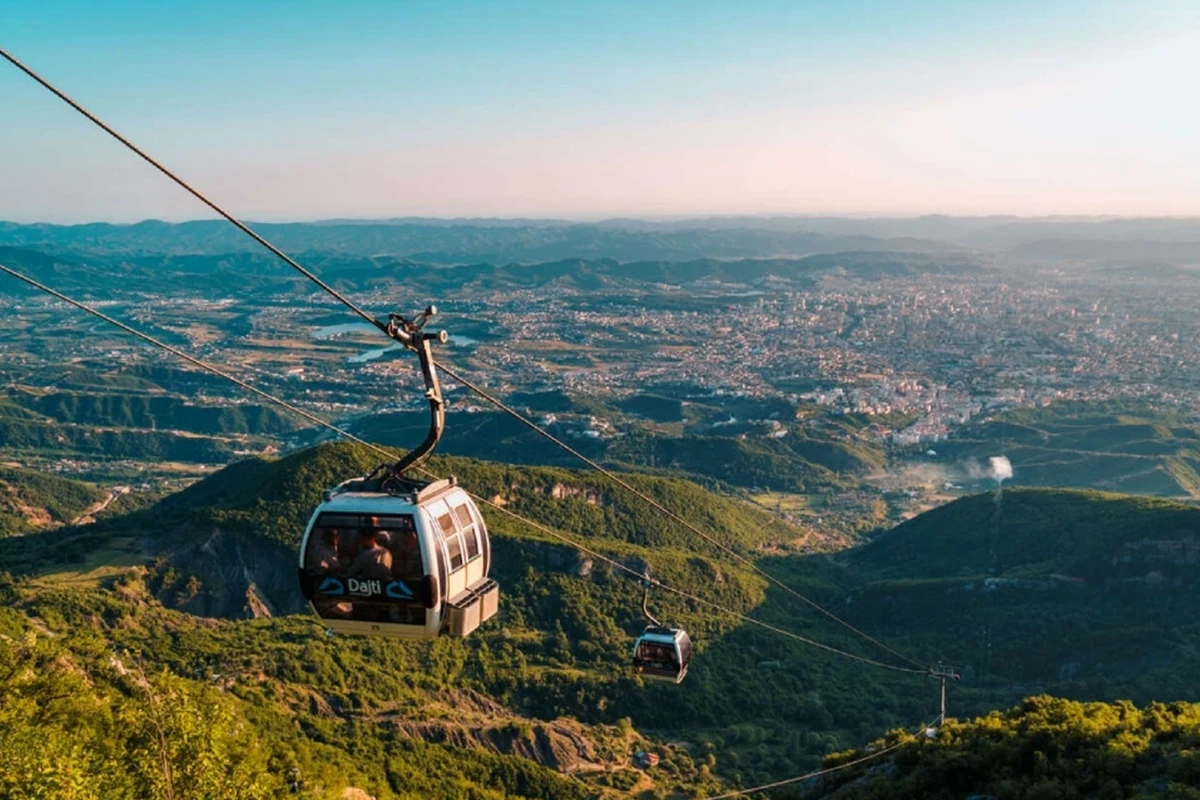
Local buses cover Tirana and the nearby towns. They are very cheap, a low flat fare well under one euro, paid in cash to a conductor on board, so keep small notes and coins ready. Buses are useful for longer trips, such as towards the Dajti cable car, but they can be crowded and slow in traffic. Routes are not always obvious to visitors, so ask your host which bus fits your plan.
Taxis and ride apps
Official taxis are easy to find at ranks around the centre and are reasonably priced for short trips, which are most trips within the city. The simplest method is a taxi app on your phone, which shows the fare before you book and avoids any language difficulty. Ask your host which app is most used right now.
If you take a street taxi, agree the fare first or ask the driver to use the meter. Most rides within the city are short and inexpensive. The airport run is the main exception and costs noticeably more.
Driving, cycling and parking
You do not need a car to enjoy Tirana, and most guests are better off without one. Traffic is heavy at peak times, the driving style is assertive, and parking in the centre is limited and stressful. A car only makes sense if you plan several day trips, and even then hiring a taxi or driver for the day is often easier. Cycling exists and there are some bike lanes, but the busy traffic makes it better suited to confident riders.
Getting to the day-trip towns
For towns beyond Tirana, such as Krujë, Durrës or Berat, regional buses and shared minibuses called "furgon" leave from set points in the city. They are cheap but slower, and the departure points can be confusing without local help. For a day trip with limited time, hiring a taxi or driver is the easier choice. See the Day Trips guide for details.
When the city is busy
Traffic peaks roughly between 8 and 9am and again from 5 to 7pm. During these windows, walking inside the centre is often faster than any vehicle. Plan longer journeys, and especially any airport trip, outside these hours where you can.
Before you head out, screenshot your route or save the map offline. Phone signal is fine in the city, but a saved map means you can show a taxi driver exactly where you are going even if you cannot pronounce the street name.
Your HostCITY LINE APARTMENTS
A few practical points
Walking with a pushchair or a wheelchair is manageable in the flat centre, but uneven pavements and high kerbs mean some care is needed; the main boulevard and Skanderbeg Square are the smoothest. Keep a little cash for buses, as conductors do not take cards. And download an offline map and a taxi app before you go out for the day, so a weak signal never leaves you stuck.
For the airport journey specifically, see the Airport to Apartment Guide. The Getting Around page has parking notes and local transport detail.